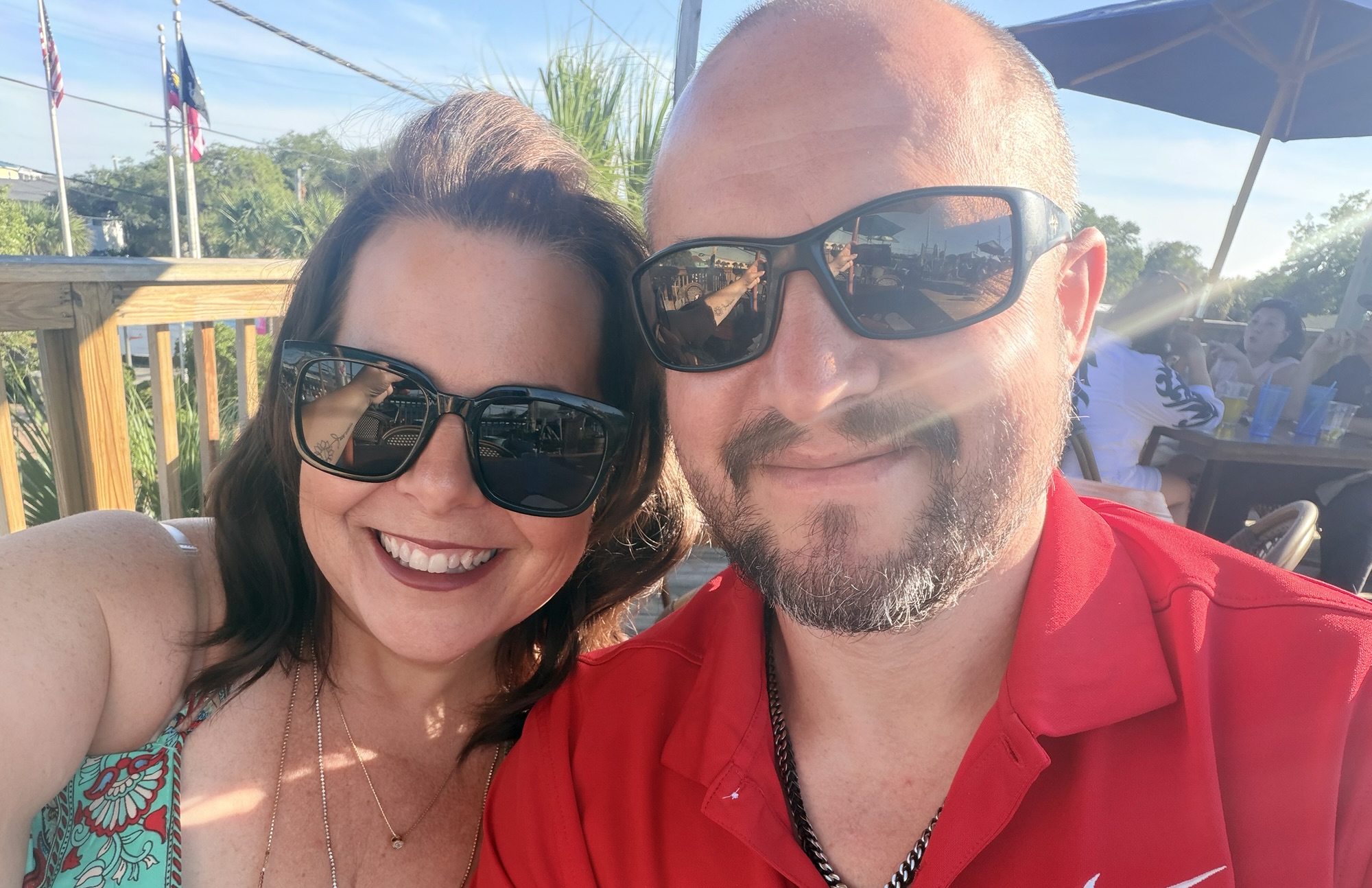

My husband and I have been best friends for as long as I can remember.
We tell each other everything. We genuinely enjoy being together. We celebrate each other’s victories, encourage each other through the hard days, and have always found comfort in knowing that, no matter what happened outside the walls of our home, we had each other.
So when my husband had a stroke on August 30, 2025, it knocked our world off balance.
He changed.
But if I am going to tell you about the day my husband changed, I can’t really start with the stroke.
I have to take you back to April 3, 2025, when his father passed away.
Then, just 23 days later, on April 26, his little brother—his best friend—was killed in the line of duty.
His brother wasn’t just his little brother. With thirteen years between them, their relationship was different. In many ways, my husband looked at him almost like a son. He loved him. Protected him. Worried about him. And losing him so suddenly and violently changed something inside of him.
His world became smaller.
He became distant.
I tried to understand.
The night his brother was killed, two men came to tell us what had happened. Later, when we went to make arrangements for his service, two more people were there to “help” us. At the time, we didn’t realize how much we didn’t know. We didn’t understand the things we felt were being hidden from us or how many questions we would eventually have.
And somewhere in the middle of grief, confusion, and unanswered questions, my husband stopped trusting what people told him.
Things became blurred and painfully clear at the exact same time.
People in the community we thought we could trust suddenly felt different. A system we once believed in no longer looked the same from where we were standing. From our perspective, we saw decisions, actions, and failures that left us questioning everything. We saw what we believed was manipulation and arrogance, and yet somehow, in the middle of it all, we felt completely alone.
We felt like no one would believe our story.
People believed the narrative they were given, while we were left with questions about why officers were placed in situations without the backup they needed and whether decisions were made for the right reasons.
Those questions didn’t disappear when the funeral ended.
They stayed.
They festered.
My husband carried them with him every single day.
He carried the grief of losing his father.
He carried the devastation of losing his brother.
He carried anger.
He carried unanswered questions.
He carried the weight of wanting justice and the fear that it might never come.
And eventually, all of that weight took a toll on his body and his mind.
Then came the stroke.
I don’t think I have ever been more terrified in my life.
The thought of losing my husband—my best friend, my person—was unbearable. In those moments, nothing else mattered. Not the questions. Not the anger. Not the people who disappointed us. Not the fight we had been fighting.
I just wanted him.
I wanted him alive.
I wanted my best friend to come home.
He did.
But after everything we had been through, something was different.
He became more distant.
More angry.
More afraid.
He couldn’t always do the things he had once done so easily, and I could see the frustration written all over him. I could see him trying to understand a body that suddenly didn’t always cooperate with the mind that was telling it what to do.
And I didn’t always know how to help him.
That may have been one of the hardest parts for me.
I am his wife. I love him. I want to fix things for him.
I want to take away the grief.
I want to take away the anger.
I want to erase the images and memories that keep replaying.
I want to give him answers to questions I cannot answer.
I want to make his body work exactly the way it did before.
I want to give him back the pieces of himself that he feels like he lost.
But I can’t.
And sometimes, that scares me.
Don’t get me wrong. Through all of this, he has never stopped telling me that he loves me. He still tells me I’m beautiful. He still reminds me every single day that I am his person.
But when someone you love changes, even when you understand why, fear has a way of creeping in.
I found myself wondering, What if one day he changes so much that he decides he doesn’t love me anymore?
He has assured me that day will never come.
And I believe him.
The truth is, I don’t need my husband to be exactly who he was before April 2025.
Because I’m not the same person I was before then either.
Grief changed him.
Fear changed him.
The stroke changed him.
And watching the person I love most walk through all of it changed me, too.
I still want justice for him. I want him to see the justice he has been waiting for since April 26, 2025. But I am afraid that day may never come in the way we hope it will.
Sometimes systems fail people.
Sometimes people see only what they want to see.
Sometimes people support whoever they believe will benefit them, never knowing—or perhaps never caring—about the devastation left behind.
Those are difficult truths to accept.
But there is one truth I refuse to let any of this take away from us:
We still have each other.
My husband has changed, and we are learning how to adjust.
We are learning how to live in this version of our life.
We are learning that healing doesn’t mean forgetting. Moving forward doesn’t mean leaving his brother behind. And loving someone through trauma doesn’t mean having all the right words or knowing how to fix everything.
Sometimes love simply means staying.
It means sitting beside someone when there are no words.
It means being patient on the angry days.
It means celebrating the smallest victories.
It means reminding each other that we are still here.
And we are still here.
My husband is getting stronger.
His mind is still as sharp as it was before the stroke. His strength is returning. Day by day, we are finding our way through a life neither of us expected to be living.
Yes, my husband has changed.
So have I.
So has our life.
But one thing hasn’t changed.
Our love is still as strong as it was the day we stood together and said, “I do.”
Maybe even stronger.
Because now those words mean something different.
For better or worse.
In sickness and in health.
Those aren’t just words we once repeated.
They are words we are living.
And whatever comes next, we will face it the same way we have faced everything else.
Together.
Leave a Reply